
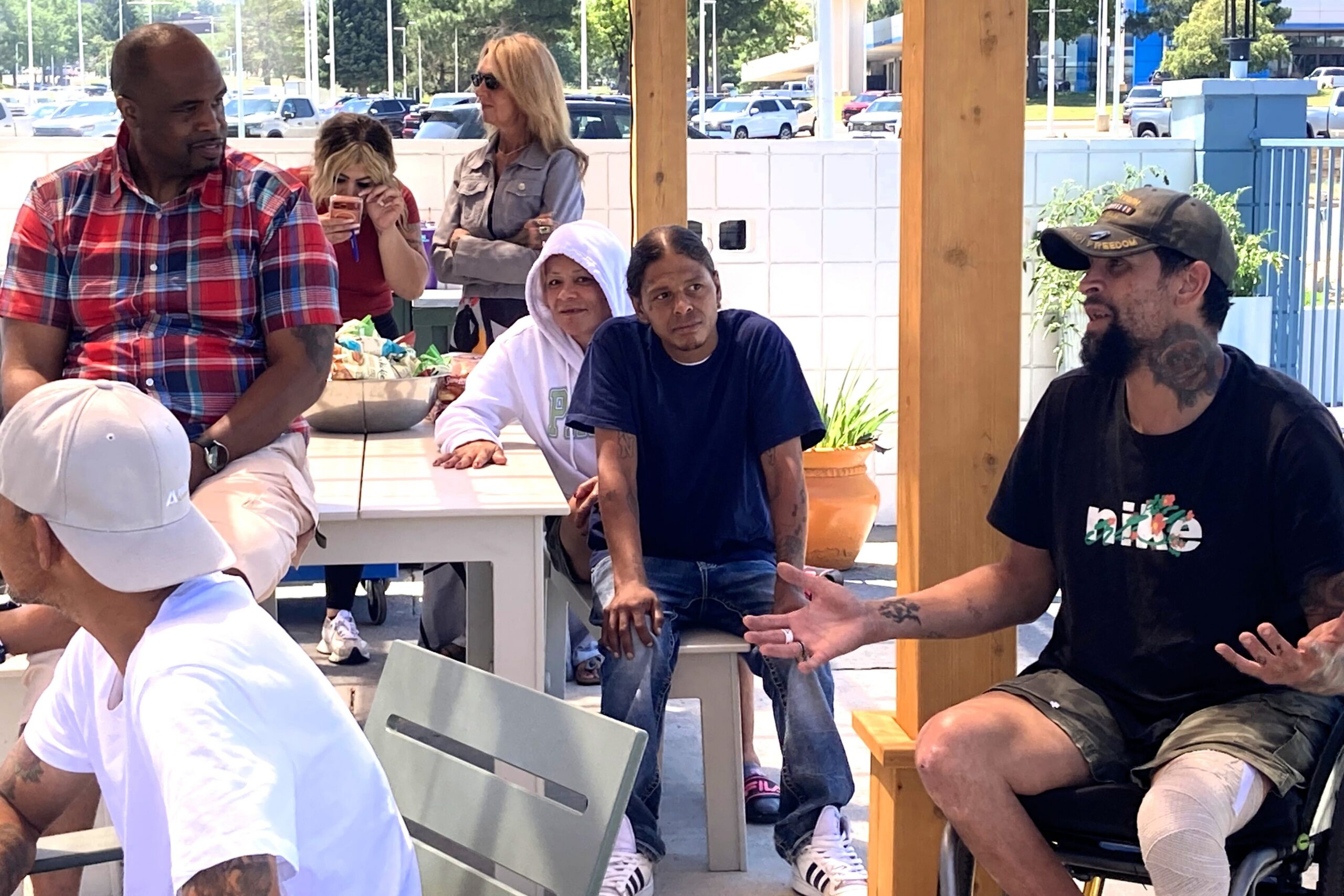
What makes recovery possible? During Recovery Month, we're exploring that question with our community. The answers remind us that recovery is deeply personal, but rarely happens alone. In this essay, RecoveryWorks Executive Director James Ginsburg shares a perspective shaped by more than 30 years of working alongside people experiencing homelessness, addiction, and other complex challenges, and the philosophy that guides RecoveryWorks' approach today.
September is National Recovery Month, a time to recognize the millions of people whose lives have been transformed through recovery. It is also a chance to ask a broader question: What makes recovery possible?
Recovery is often discussed in the context of substance use or mental health. But in working with people experiencing homelessness, I have come to understand recovery more broadly. It can mean regaining health and stability, rebuilding relationships, finding purpose and ultimately having a place to call home.
After 30 years working with people experiencing homelessness, addiction and other complex challenges, I have learned that recovery is rarely the result of individual determination alone. People need safety, stability, connection and purpose. They need somewhere to live, access to health care, meaningful relationships and opportunities to support themselves. When those stabilizing forces disappear, even remarkably resilient people can struggle.
Homelessness is, by definition, a housing problem. But for many people, the long path into and out of homelessness involves much more than housing.
I think of Diane, a recent guest at RecoveryWorks, a Lakewood nonprofit serving neighbors experiencing homelessness. After an early childhood marked by severe abuse, she grew up in the foster care system, moving through group homes without ever finding a permanent family. As an adult, she experienced disability, addiction, abusive relationships and devastating loss. Eventually, she became homeless.
By the time a street outreach team met Diane in a Lakewood parking lot, homelessness was the most visible crisis in her life. But it was hardly the first.
Once she had a safe place to stay, she could begin addressing the other pieces. She entered recovery treatment, replaced identification documents, accessed benefits and worked toward permanent housing. After 40 years of drug use, she told us this was the first time she had been sober. A few months later, at age 53, Diane moved into an apartment of her own for the first time in her life.
Diane’s story is uniquely her own, but the overlapping challenges are not. By the time someone arrives at a homeless services program, years of unmet needs may have accumulated across many parts of life. Yet we often ask people at perhaps the most unstable moment of their lives to find housing, address health conditions, navigate benefits, seek employment, pursue recovery and rebuild relationships, often simultaneously.
This is where person-centered care matters in recovery.
Person-centered care begins with a simple shift in perspective. Instead of asking only, “What is wrong with this person?” we ask: “What happened to this person? What matters to them? And how can we support their goals?”
Ultimately, person-centered care challenges us to see human beings before diagnoses, circumstances, policies or funding streams, and to recognize the whole person. We all need the same fundamental things to build a stable life: housing, health, connection, purpose, opportunity and belonging.
Person-centered care also acknowledges another fundamental truth: healthy boundaries are essential to human well-being. Respecting people does not mean abandoning expectations. Effective care balances autonomy with accountability and compassion with consistency. Boundaries create safety. Stability creates trust. Trust creates the opportunity for meaningful growth and lasting change.
Our challenge is to build systems that recognize the complexity of people’s lives rather than asking people to fit neatly within the boundaries we have created to serve them. Too often, the people with the greatest needs are also the ones asked to navigate the greatest complexity.
The health of a community cannot be measured solely by the success of those who are thriving. It must also be measured by how effectively it supports those who are struggling. When people are left behind, the consequences ripple through families, neighborhoods and communities. When we build systems that give people a genuine opportunity to achieve stability, health, recovery and belonging, those benefits ripple outward as well, creating stronger, healthier and more resilient communities for everyone.
Recovery Month rightly celebrates the courage and resilience of people rebuilding their lives. But recovery is not simply an individual achievement. It is something communities help make possible, one day and one decision at a time.
During Recovery Month, may we recommit ourselves to building communities where every person is seen, valued and supported, and where recovery is not merely possible, but expected.